
Frozen Shoulder (Adhesive Capsulitis): Causes, Stages & How Physiotherapy Helps | Hamilton & Stoney Creek
Frozen Shoulder (Adhesive Capsulitis): Causes, Stages & How Physiotherapy Helps
Struggling to lift your arm, reach overhead, or sleep on your shoulder? You might be dealing with frozen shoulder, also called adhesive capsulitis—a condition that can last 12–24 months or longer without proper treatment.
At Wellspring Health & Wellness in Hamilton & Stoney Creek, our registered physiotherapists use evidence-based treatment to help reduce pain, restore shoulder movement, and get you back to daily life as safely and efficiently as possible.
Book Physiotherapy for Frozen Shoulder
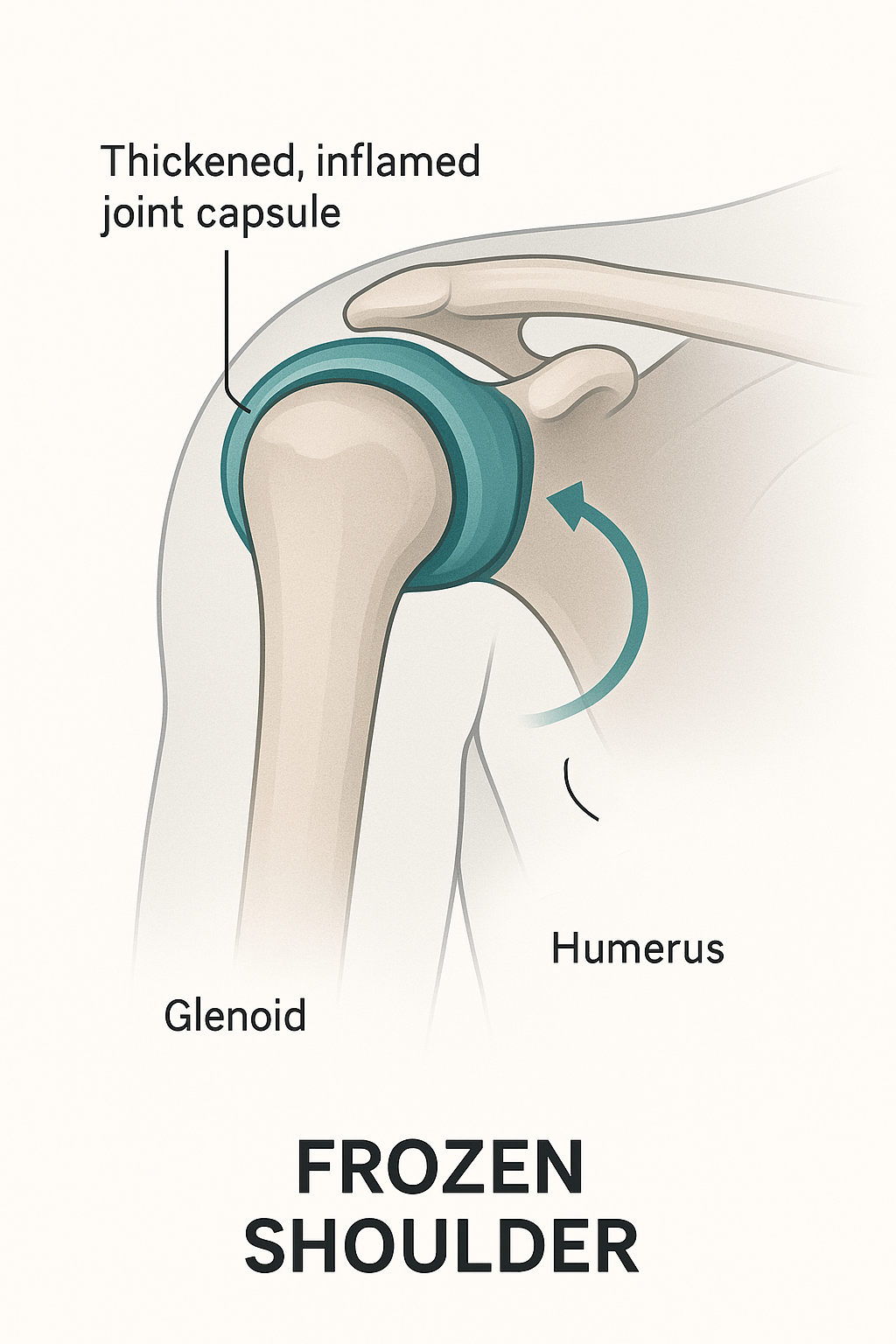
What Is Frozen Shoulder (Adhesive Capsulitis)?
Frozen shoulder is a condition where the capsule of the shoulder joint (the soft tissue envelope that surrounds the ball-and-socket joint) becomes inflamed, thickened, and tight. Over time, this capsule can contract and form adhesions, limiting how far the humeral head (upper arm bone) can move in the socket.
As a result, the shoulder becomes:
- Painful — especially with movement and often at night
- Stiff — with a noticeable loss of range of motion
- Functionally limited — everyday tasks like dressing, reaching, and lifting become difficult
Without guidance, frozen shoulder can follow a long, frustrating course. The good news: targeted physiotherapy can help shorten the painful stages and improve function sooner.
Who Gets Frozen Shoulder?
Frozen shoulder can affect anyone, but it is most common in:
- Adults between 40 and 60 years old
- People with diabetes or thyroid conditions
- Individuals who’ve had a period of immobilization (e.g., after a fracture, surgery, or sling use)
- Those with a history of shoulder injury or irritation
It can also appear “out of the blue” with no obvious injury. In these cases, subtle inflammation of the capsule and protective muscle guarding may gradually lead to stiffness and pain.
The 3 Stages of Frozen Shoulder
Frozen shoulder usually follows three overlapping stages. The total process can last from 12 to 24 months or longer, but physiotherapy can help change the experience of each stage.
-
1. Freezing Stage (painful stage)
Shoulder pain gradually increases, often worse at night or with sudden movements. Range of motion starts to decrease. This stage may last 2–9 months. -
2. Frozen Stage (stiff stage)
Pain may reduce slightly, but stiffness is now the main problem. Reaching overhead, out to the side, or behind the back becomes very limited. This can last 4–12 months. -
3. Thawing Stage (recovery stage)
Shoulder movement slowly begins to improve. With the right treatment and exercises, many people regain a large portion of their function. This stage can last 6–12 months or more.
Symptoms You Shouldn’t Ignore
Common signs of frozen shoulder include:
- Deep, aching pain in the shoulder and upper arm
- Night pain that makes it hard to sleep, especially when lying on the affected side
- Difficulty reaching overhead (e.g., into a cupboard)
- Difficulty reaching behind your back (e.g., fastening a bra, tucking in a shirt)
- Loss of external rotation (turning the arm out to the side) — often one of the earliest changes
If these symptoms sound familiar, a thorough assessment with a physiotherapist is recommended to confirm whether it is frozen shoulder or another shoulder problem.
What Causes Frozen Shoulder?
The exact cause is not always clear, but frozen shoulder usually involves:
- Inflammation of the joint capsule
- Thickening and tightening of the capsule over time
- Adhesions (small bands of scar tissue) forming inside the capsule
- Protective muscle guarding due to pain and fear of movement
Risk factors include:
- Shoulder immobilization after injury or surgery
- Diabetes and some metabolic conditions
- Age between 40–60 years
- Previous frozen shoulder on the other side
How Physiotherapy Helps Frozen Shoulder
Physiotherapy is one of the main evidence-based treatments for frozen shoulder. At Wellspring Health & Wellness, our physiotherapists in Hamilton & Stoney Creek use a combination of hands-on care, targeted exercise, and education to help you move through each stage more comfortably.
Clinical Assessment
Your physiotherapist will assess your range of motion, strength, posture, and pain patterns to determine which stage you’re in and rule out other shoulder conditions (like rotator cuff tears).
Manual Therapy & Joint Mobilization
Gentle joint mobilizations and soft-tissue techniques help improve shoulder mobility, reduce protective muscle guarding, and restore normal joint mechanics when appropriate.
Individualized Exercise Program
You’ll receive a staged exercise plan that matches your current phase (freezing, frozen, or thawing). This may include stretching, active-assisted movement, and gradual strengthening.
Pain Management Strategies
Your physiotherapist may use modalities such as heat, ice, or clinical acupuncture/dry needling (when indicated) alongside education on pacing and sleeping positions to help manage pain.
Education & Self-Management
Understanding what frozen shoulder is—and what to expect—can reduce anxiety and help you stay consistent with your exercises. We’ll show you how to move without aggravating symptoms and how to gradually increase your activity.
Our goal is to help you move better, sleep better, and return to your daily activities with confidence—not just to “mask” the pain.
Book Frozen Shoulder Physiotherapy in Hamilton & Stoney Creek
Recovery Timeline With Physiotherapy
Every shoulder is different, but many people notice improvements in pain and function within the first few weeks of consistent treatment and home exercises.
- Short term (first 4–6 weeks): focus on pain control, gentle mobility, and preventing further stiffness.
- Medium term (2–6 months): progressive stretching and strengthening, improved function in daily activities.
- Long term (6–12+ months): continued gains in range of motion and strength, depending on the stage at which treatment began.
Without any treatment, frozen shoulder often still recovers—but it may take longer and leave more residual stiffness. Physiotherapy aims to make that journey shorter, safer, and more functional.
Exercises for Frozen Shoulder
The best exercises depend on your stage and pain level, so it’s important to be guided by a physiotherapist. Common exercises may include:
- Pendulum swings: gentle, gravity-assisted circles to encourage movement without loading the joint too much.
- Table slides: sliding your hand forward on a table to assist shoulder flexion.
- Wall climbs: walking your fingers up the wall to gradually increase overhead reach.
- External rotation stretches: using a stick or towel to gently rotate the arm outward.
- Isometric strengthening: gentle muscle activation without large movement, progressing to light resistance as tolerated.
Are Injections or Surgery Needed?
Some people with frozen shoulder may benefit from medical interventions such as:
- Corticosteroid injections to help reduce inflammation and pain in the early painful stage.
- Hydrodilatation (joint distension) in selected cases.
- Surgical options such as manipulation under anesthesia or capsular release, typically reserved for severe, stubborn cases.
Even when these are used, physiotherapy remains essential before and after the procedure to restore movement and strength. Your physiotherapist can also help you decide when it may be appropriate to discuss these options with your physician.
When to See a Physiotherapist
Book an assessment with a physiotherapist if:
- Shoulder pain is affecting your sleep or daily activities
- You notice a gradual loss of shoulder movement, especially turning the arm outwards
- Simple tasks like dressing, grooming, or reaching overhead are becoming difficult
- Pain has lasted more than a few weeks and is not improving
Early intervention can help reduce pain, prevent further stiffness, and keep you functioning as well as possible while the shoulder heals.
Frozen Shoulder FAQs
Is frozen shoulder curable?
In many cases, yes. Most people experience significant improvement or full resolution of symptoms over time, especially with appropriate physiotherapy and home exercises. Some residual stiffness may remain in severe or long-standing cases.
How long does frozen shoulder last?
Without treatment, frozen shoulder can last 12–24 months or longer. With physiotherapy, many people experience earlier improvements in pain and function and a smoother progression through the stages.
Can physiotherapy speed up frozen shoulder recovery?
Physiotherapy can’t change the biology of every case, but it can reduce pain, maintain or restore movement, and improve strength, which often leads to better function and a shorter, less disabling course.
Is frozen shoulder the same as a rotator cuff tear?
No. Frozen shoulder primarily affects the joint capsule, while rotator cuff tears affect the shoulder tendons. Some symptoms overlap, which is why a detailed assessment by a physiotherapist is important.
What is the fastest way to treat frozen shoulder?
There is no instant cure, but the most effective approach usually combines physiotherapy-guided exercises, manual therapy, pain-management strategies, and, in some cases, medical interventions like injections. The key is a tailored plan rather than doing random stretches.