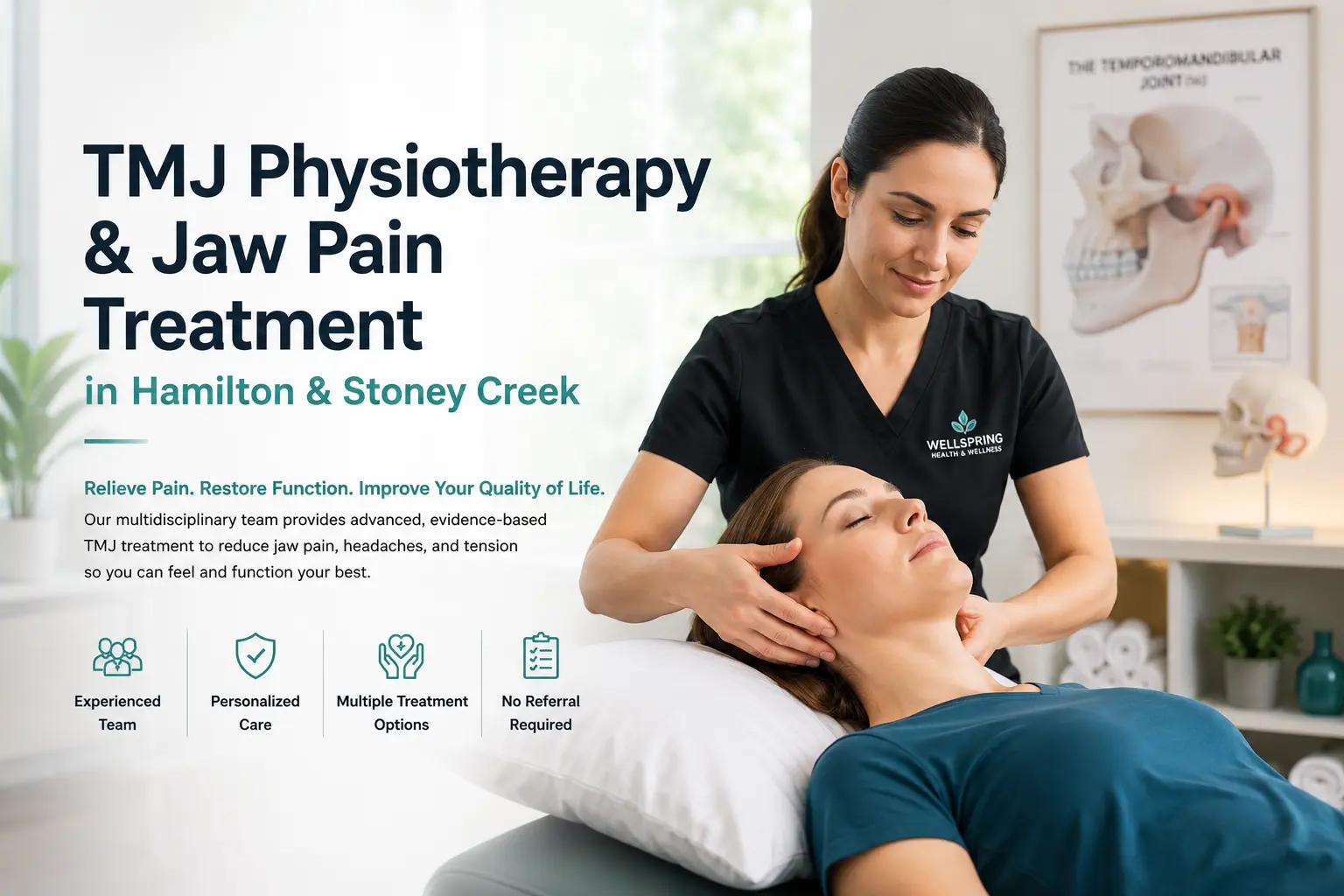
TMJ Physiotherapy & Jaw Pain Treatment in Hamilton & Stoney Creek
Relieve jaw pain, clicking, tension, headaches, and TMJ dysfunction with a multidisciplinary treatment team at Wellspring Health & Wellness.
Our team provides TMJ physiotherapy, chiropractic care, buccal facial massage, acupuncture, manual therapy, dry needling, cupping, joint mobilization, TENS, exercise therapy, and home exercise programs to help reduce pain and improve jaw function.
What Is TMJ Dysfunction?
TMJ stands for temporomandibular joint, the joint that connects your jawbone to your skull. TMJ dysfunction can occur when the jaw joint, surrounding muscles, neck, posture, bite mechanics, or stress-related clenching affect how the jaw moves.
When the TMJ becomes irritated, tight, inflamed, or poorly coordinated, it can lead to jaw pain, clicking, popping, locking, headaches, facial pain, ear symptoms, and difficulty chewing or speaking.
Signs & Symptoms of TMJ Dysfunction
Jaw Clicking
Clicking or popping when opening, closing, chewing, or yawning.
Locked Jaw
Difficulty opening or closing your mouth fully.
Teeth Grinding
Clenching or grinding that may increase jaw tension and headaches.
Ear Pain or Fullness
TMJ irritation can sometimes feel like ear pressure, fullness, or aching.
Facial Pain
Pain around the jaw, cheek, temples, or side of the face.
Headaches & Migraines
Jaw and neck tension can contribute to recurring headaches or migraine-like symptoms.
Neck Pain
The jaw and neck often work together, so stiffness in one area can affect the other.
Jaw Popping
Popping, shifting, or catching sensations in the jaw joint.
Postural Dysfunction
Forward head posture and upper neck stiffness can contribute to TMJ symptoms.
Common Causes of TMJ Pain
- Teeth grinding or jaw clenching
- Stress-related muscle tension
- Neck stiffness or upper cervical dysfunction
- Poor posture or prolonged desk work
- Jaw trauma or sports injuries
- Dental procedures or prolonged mouth opening
- Jaw joint irritation or inflammation
- Muscle imbalance around the jaw and neck
- Headaches or migraine patterns
- Limited jaw mobility
Your TMJ Care Team
Wellspring offers a multidisciplinary TMJ treatment approach. Depending on your symptoms, your care may involve physiotherapy, chiropractic care, massage therapy, buccal facial massage, naturopathic acupuncture, or a combination of services.

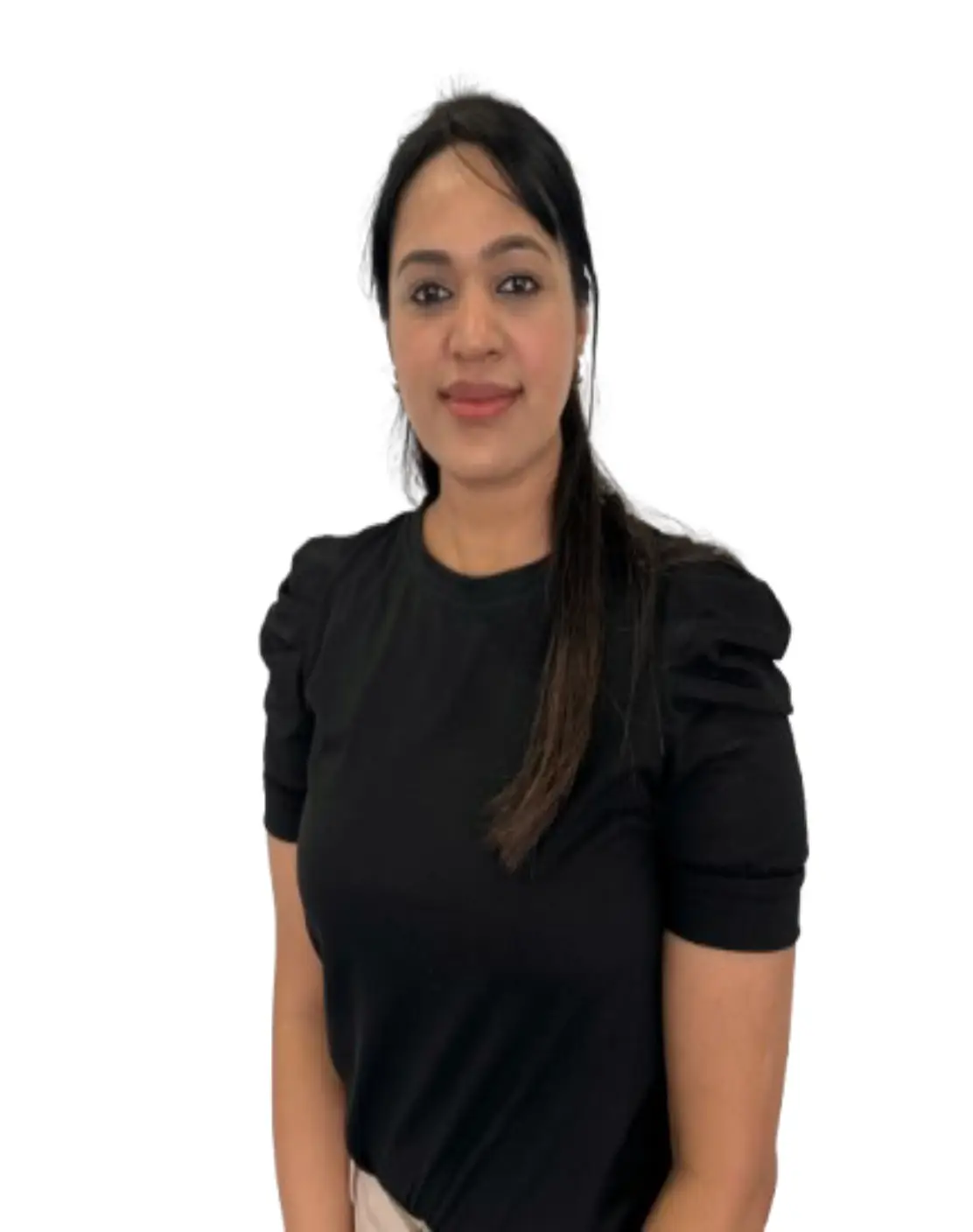
Kriti, PT
TMJ Physiotherapy, Dry Needling, Acupuncture, Cupping & Manual Therapy
Kriti is a Physiotherapist at Wellspring Health & Wellness with over 8+ years of clinical experience. She provides evidence-based care for TMJ dysfunction, musculoskeletal pain, pelvic health concerns, and patients looking for acupuncture, dry needling, cupping therapy, and manual therapy support.
Kriti has additional training in acupuncture, dry needling, cupping therapy, TMJ rehabilitation and manual therapy.
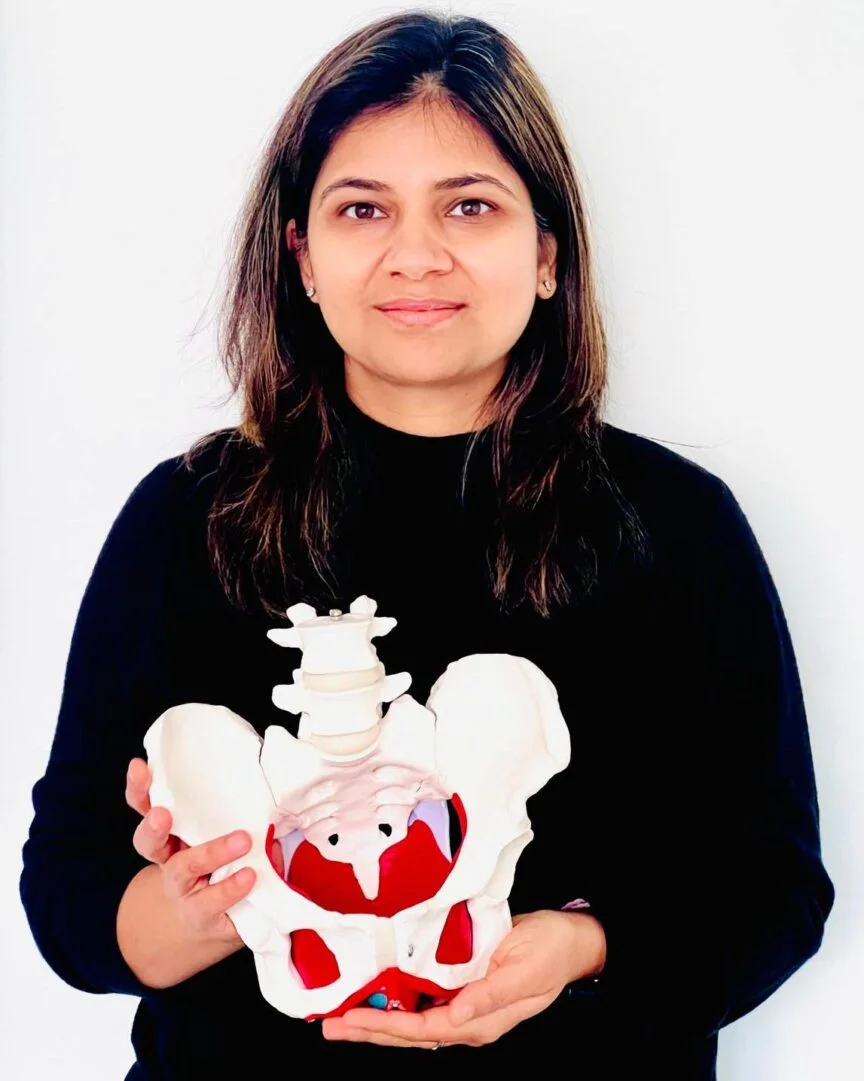
Neha Gandhi, PT
TMJ Physiotherapy, Neck Pain, Headaches & Exercise Rehabilitation
Neha Gandhi is a dedicated Registered Physiotherapist in Hamilton with strong experience in patient care and rehabilitation. She treats TMJ dysfunction, jaw pain, neck pain, headaches, postural issues, sports injuries, and musculoskeletal conditions.
Her approach focuses on hands-on care, education, movement correction, and personalized exercises to help patients regain strength, mobility, and confidence.
Dr. Rohit Sharma, Chiropractor
TMJ Chiropractic Care, Jaw Mobilization, Neck Pain & Headaches
Dr. Rohit Sharma provides evidence-based chiropractic care for TMJ dysfunction, neck pain, headaches, back pain, and sports injuries. He holds a Doctor of Chiropractic degree from the Canadian Memorial Chiropractic College and an Honours B.Sc. from McMaster University.
Trained in acupuncture, athletic taping, and soft-tissue release, Dr. Sharma helps patients recover faster and move better by addressing joint mechanics, muscle tension, posture, and movement patterns.
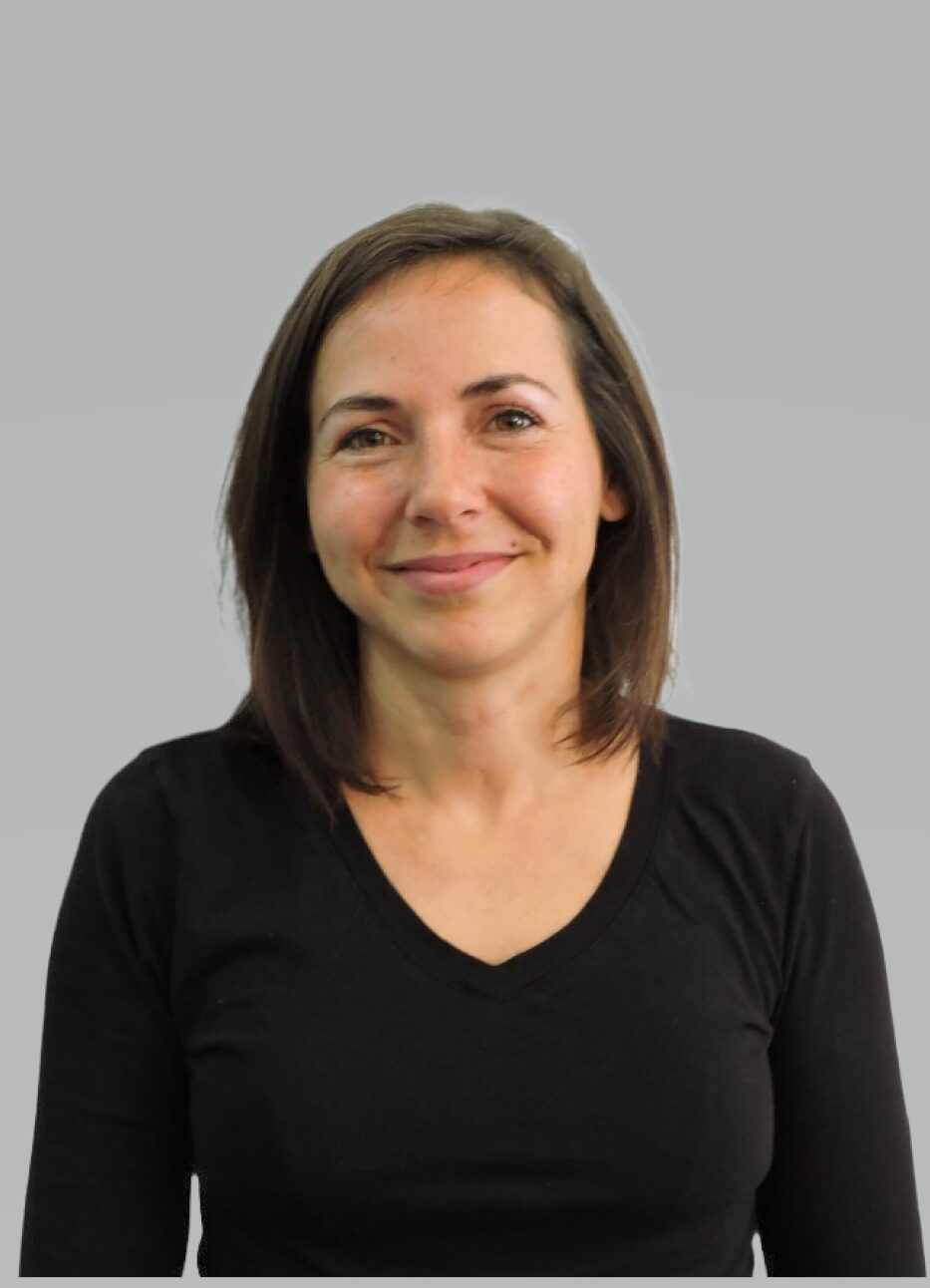
Martina Gyokery, RMT
Buccal Facial Massage, Facial Tension & TMJ-Related Muscle Tightness
Martina Gyokery is a Registered Massage Therapist with extensive experience in massage therapy and holistic care. She provides buccal facial massage, massage therapy, cranial structural techniques, and soft-tissue work to help address facial tension, jaw muscle tightness, masseter tension, and TMJ-related discomfort.
Buccal facial massage can be especially helpful for patients who experience clenching, jaw tightness, facial tension, and muscle-related TMJ symptoms.
Dr. Nora Ovtcharova, ND
TMJ Acupuncture, Muscle Tension, Stress-Related Clenching & Headaches
Dr. Nora Ovtcharova is a licensed Naturopathic Doctor with the College of Naturopaths of Ontario. She has experience working collaboratively with multidisciplinary teams and uses acupuncture as part of her approach to pain, inflammation, circulation, and tissue repair.
For TMJ concerns, acupuncture may support jaw pain, muscle tension, stress-related clenching, headaches, and inflammation as part of a broader care plan.
Your Personalized TMJ Care Pathway
Jaw Pain
Assessment
Treatment Plan
Home Exercises
Long-Term Relief
You do not need to know which provider to book first. Our team can help guide you toward the right starting point based on your symptoms, whether that is physiotherapy, chiropractic care, massage therapy, buccal facial massage, acupuncture, or a combination of care.
How TMJ Physiotherapy Can Help
TMJ physiotherapy focuses on improving jaw movement, reducing muscle tension, addressing neck and posture contributors, and building long-term self-management strategies. Treatment may include manual therapy, jaw exercises, neck mobility work, postural correction, dry needling, cupping, TENS, joint mobilization, and a home exercise program.
TMJ Chiropractic Care
Chiropractic care may help when TMJ symptoms are connected to neck stiffness, upper cervical dysfunction, posture, headaches, or joint mechanics. Dr. Rohit Sharma provides evidence-based chiropractic care for TMJ, neck pain, headaches, and related musculoskeletal concerns.
Buccal Facial Massage for TMJ
Buccal facial massage is a specialized massage technique that works on the muscles of the face and jaw. It may help reduce tension in the masseter, temporalis, and surrounding facial muscles that can contribute to jaw pain, clenching, facial tightness, and TMJ discomfort.
Acupuncture for TMJ
Acupuncture may be used as part of a TMJ treatment plan to help reduce muscle tension, pain sensitivity, stress-related clenching, headaches, and jaw discomfort. At Wellspring, TMJ acupuncture may be provided by Dr. Nora Ovtcharova, ND, and physiotherapy-based acupuncture may also be used when appropriate.
Which TMJ Treatment Is Right for You?
Jaw Pain & Clicking
Start with TMJ physiotherapy for jaw mobility, muscle coordination, and home exercises.
Neck Pain with TMJ
Physiotherapy or chiropractic care may help address neck stiffness and posture-related contributors.
Tight Facial Muscles
Buccal facial massage may help with masseter tension, facial tightness, and clenching-related discomfort.
Stress-Related Clenching
Acupuncture, physiotherapy, and relaxation-based strategies may support muscle tension management.
Headaches or Migraines
A combined physiotherapy and chiropractic approach may help when jaw and neck tension contribute to headaches.
Ongoing Symptoms
A multidisciplinary care plan may be recommended when symptoms involve jaw, neck, posture, stress, and muscle tension.
What to Expect During Your TMJ Assessment
Your TMJ assessment may include a review of your symptoms, jaw movement, mouth opening, chewing limitations, neck mobility, posture, muscle tenderness, headaches, clenching habits, and daily activities that may be contributing to your symptoms.
Your provider will explain the findings and recommend a personalized plan. Most patients are given home exercises or self-care strategies to support progress between visits.
Why Choose Wellspring Health & Wellness?
Multidisciplinary Team
Physiotherapy, chiropractic care, massage therapy, buccal facial massage, and acupuncture under one roof.
Personalized Treatment
Your care plan is based on your symptoms, goals, comfort level, and assessment findings.
No Referral Required
You can book directly with us. Some insurance plans may request a referral for reimbursement.
Insurance Coverage
TMJ physiotherapy is generally billed under regular physiotherapy benefits. Coverage depends on your plan.
Convenient Location
We serve Hamilton, Stoney Creek, Winona, Fruitland, Grimsby, and surrounding areas.
Home Exercise Support
We help you maintain progress with a clear home exercise and self-management plan.
Frequently Asked Questions
Do I need a doctor’s referral for TMJ physiotherapy?
No. You can book directly with Wellspring Health & Wellness. Some insurance plans may require a referral for reimbursement, so it is best to check your individual plan.
Is TMJ physiotherapy covered by insurance?
TMJ physiotherapy is generally covered under regular physiotherapy benefits. Coverage depends on your individual insurance plan.
How many TMJ treatment sessions will I need?
Many patients are recommended approximately 3–5 sessions depending on the severity, duration, and complexity of the problem. Your provider will discuss this after your assessment.
Can TMJ cause headaches?
Yes. Jaw tension, clenching, neck stiffness, and TMJ dysfunction can contribute to headaches or migraine-like symptoms.
Can TMJ cause ear pain or ear fullness?
Yes. TMJ irritation can sometimes feel like ear pain, fullness, pressure, or discomfort because the jaw joint sits close to the ear.
Can physiotherapy help jaw clicking?
Physiotherapy may help improve jaw control, reduce muscle tension, and address movement patterns that contribute to clicking or popping.
Can TMJ treatment help locked jaw?
TMJ treatment may help with limited mouth opening or jaw locking depending on the cause and severity. An assessment is recommended.
Can teeth grinding cause TMJ pain?
Yes. Grinding or clenching can overload the jaw muscles and joints, contributing to pain, tightness, and headaches.
Should I see a dentist or physiotherapist for TMJ?
Both may be helpful. Dentists often assess bite, teeth grinding, and oral appliances, while physiotherapists assess jaw movement, muscles, posture, neck mobility, and function.
Is TMJ treatment painful?
Treatment is usually gentle and adjusted to your comfort level. Your provider will explain each step before beginning.
Can posture affect TMJ pain?
Yes. Forward head posture, neck stiffness, and upper back tension can contribute to jaw mechanics and muscle tension.
What treatments may be used for TMJ?
Treatment may include manual therapy, jaw exercises, joint mobilization, dry needling, acupuncture, cupping, TENS, massage therapy, buccal facial massage, posture correction, and home exercises.
TMJ Pain Holding You Back?
Book an appointment or contact us for a free 15-minute consultation to learn how TMJ treatment at Wellspring Health & Wellness may help.